
Down syndrome ironman
Robert norris
sets world record!
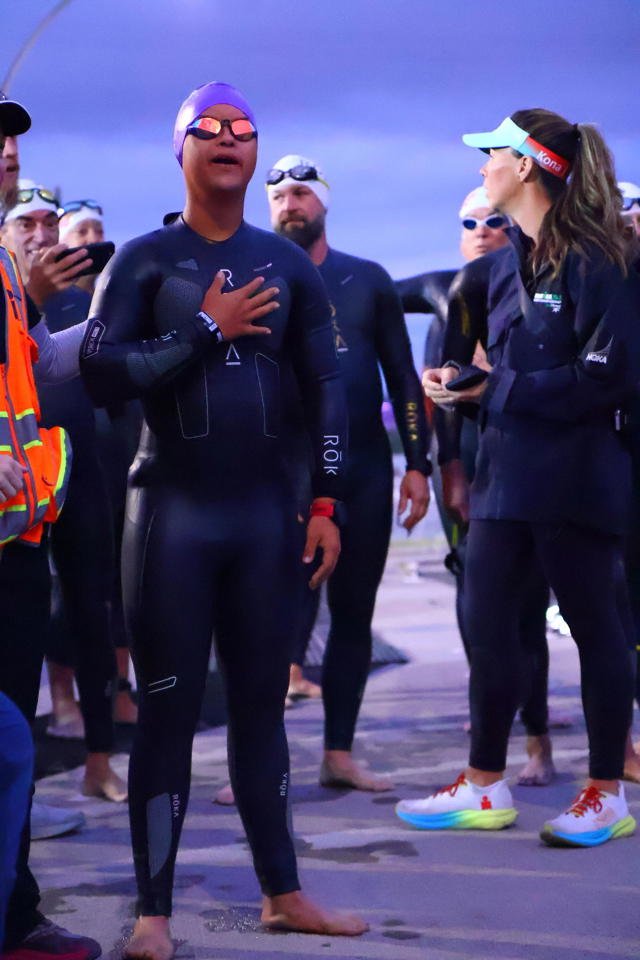
Robert Norris: The Down Syndrome Ironman
Who Broke the Tether Myth
Breaking the Tether Myth: The First Down Syndrome Athlete
to Finish an IRONMAN Without a Guide
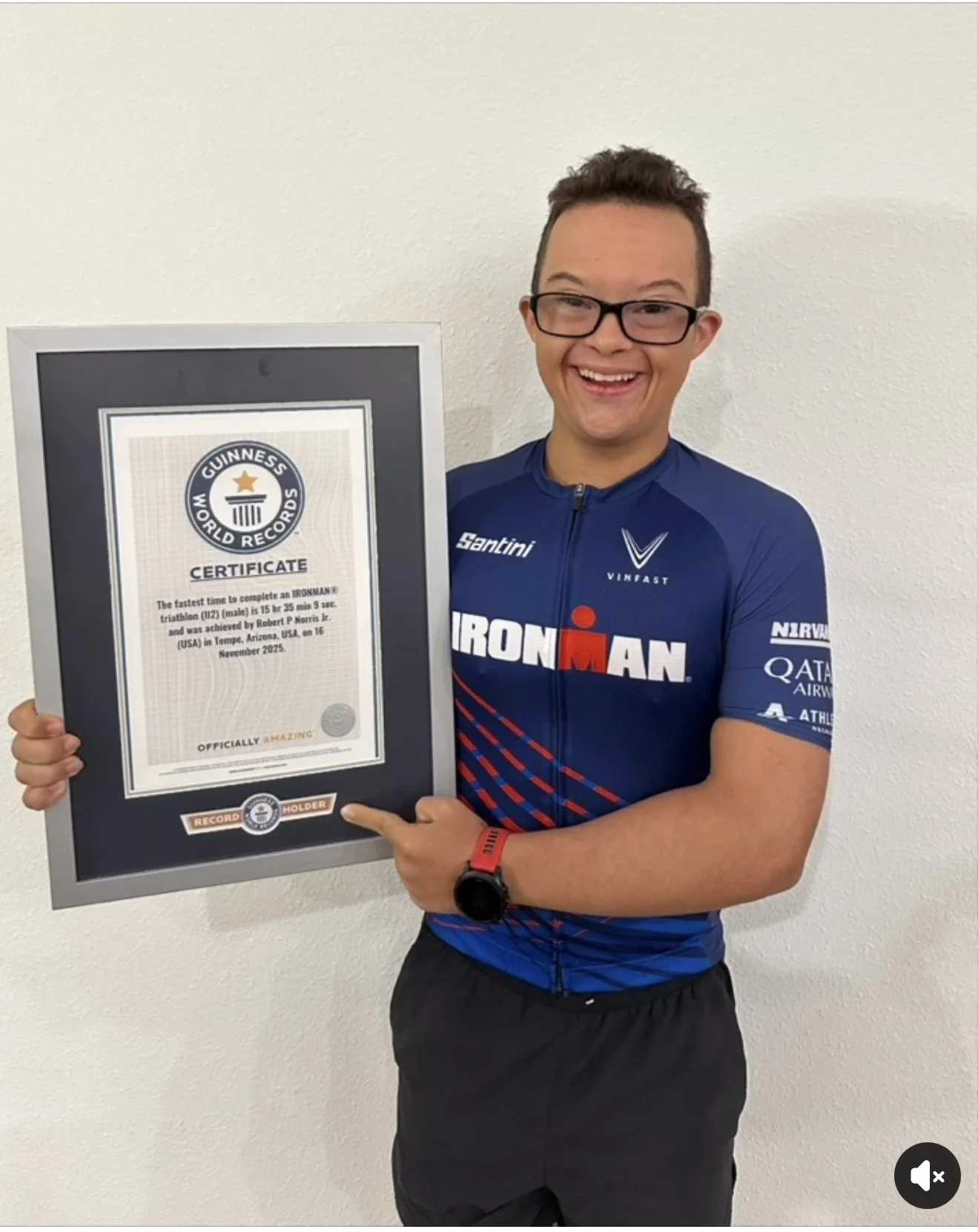
A Historic, Guinness‑Verified Achievement
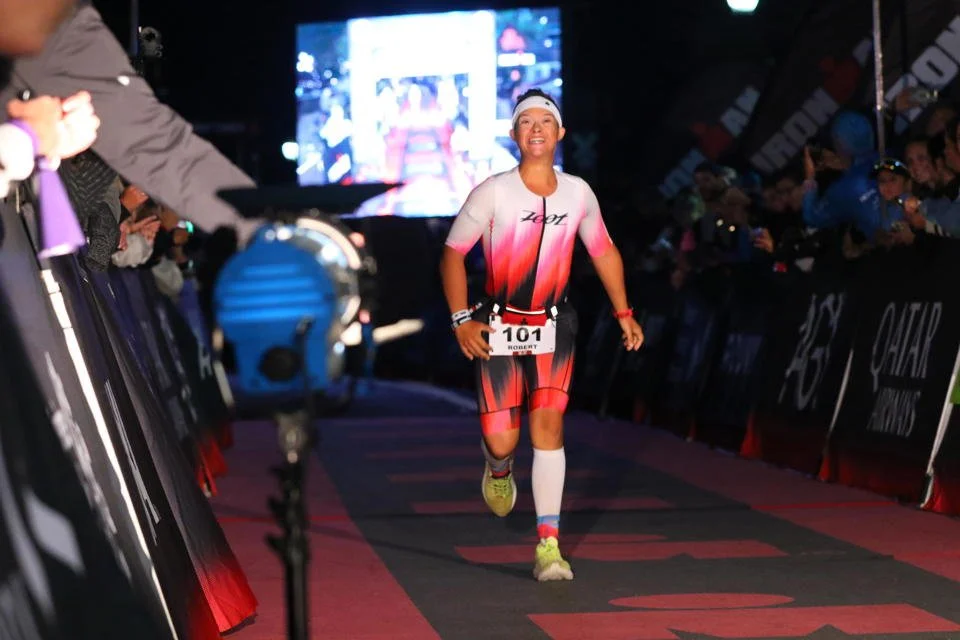
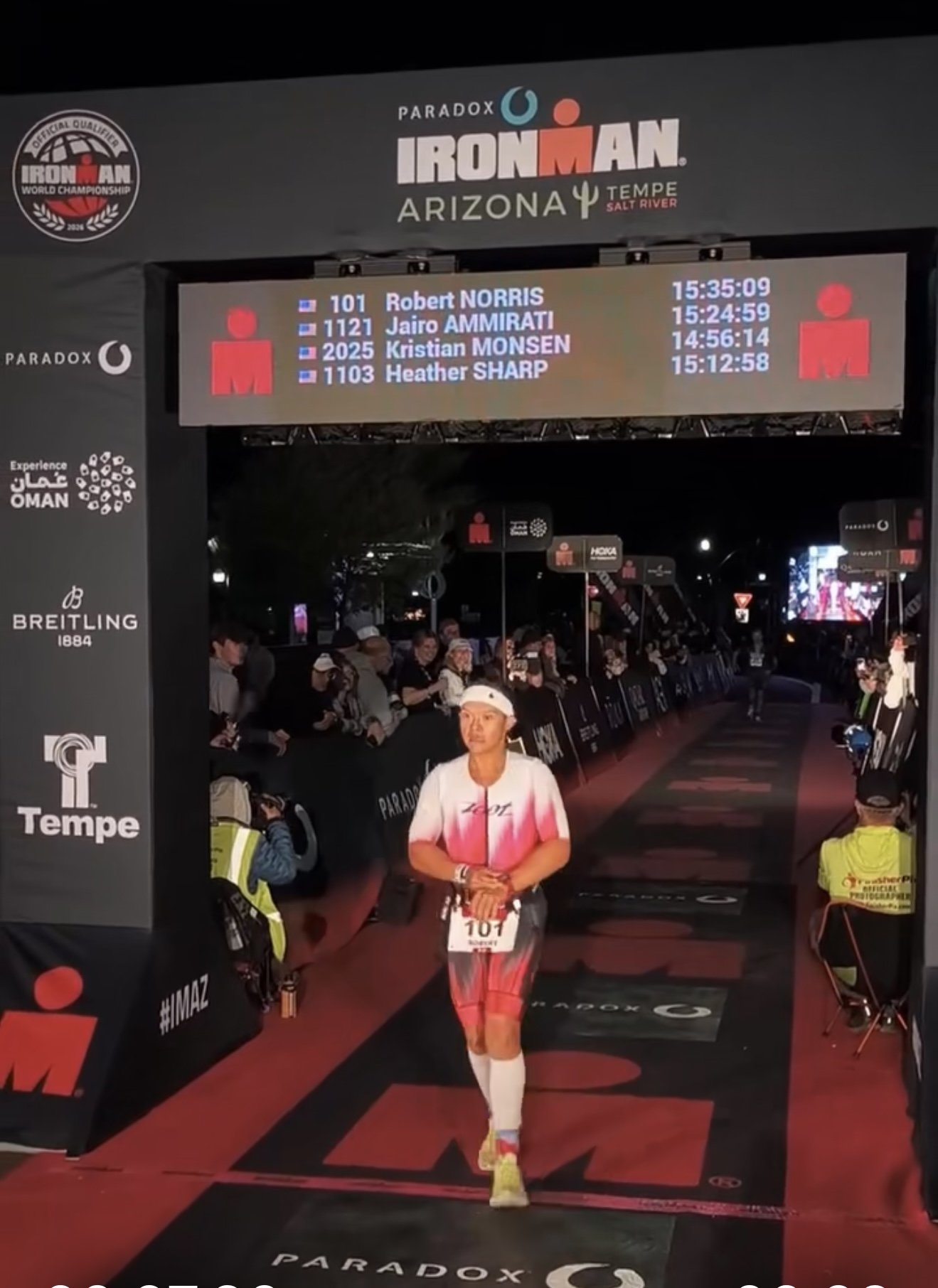
On November 16, 2025, Robert Norris completed the 140.6‑mile IRONMAN Arizona course in 15:35:09 — a 2.4‑mile swim, 112‑mile bike, and 26.2‑mile run. Guinness World Records officially recognizes him as:
The first athlete with Down syndrome to complete an IRONMAN without a guide
The fastest finishing time for a male athlete with an intellectual disability
This wasn’t a symbolic finish. This wasn’t a guided finish. This wasn’t a tethered finish.
This was an independent, fully earned, fully executed IRONMAN performance.
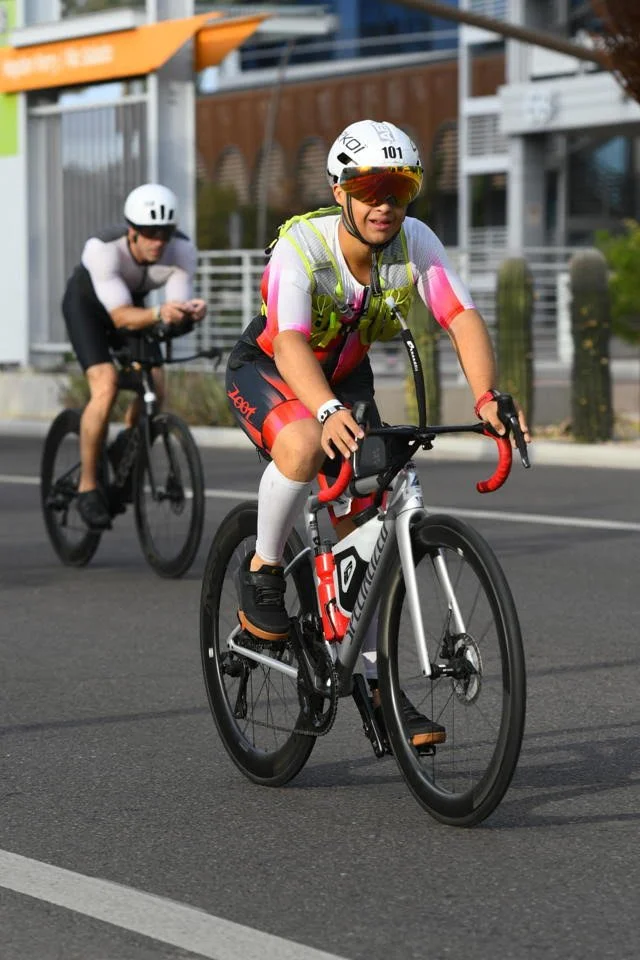
The Athlete Who Refused
the Limits
Others Tried to Place on Him
For decades, the global endurance community — and even many within the Down syndrome advocacy world — assumed that athletes with Down syndrome required tethers, guides, or forced assistance to complete a full‑distance IRONMAN triathlon.
Robert Norris proved them wrong.
When he stepped onto the start line of IRONMAN Arizona, he carried more than a timing chip. He carried the weight of a belief system that insisted he should stay tethered, stay guided, stay “safe,” stay in his lane.
He refused all of it.
And IRONMAN Arizona race leadership — unlike many voices in the Down syndrome community — chose to believe in him. They became the lid‑lifters, the ones who removed barriers instead of reinforcing them.
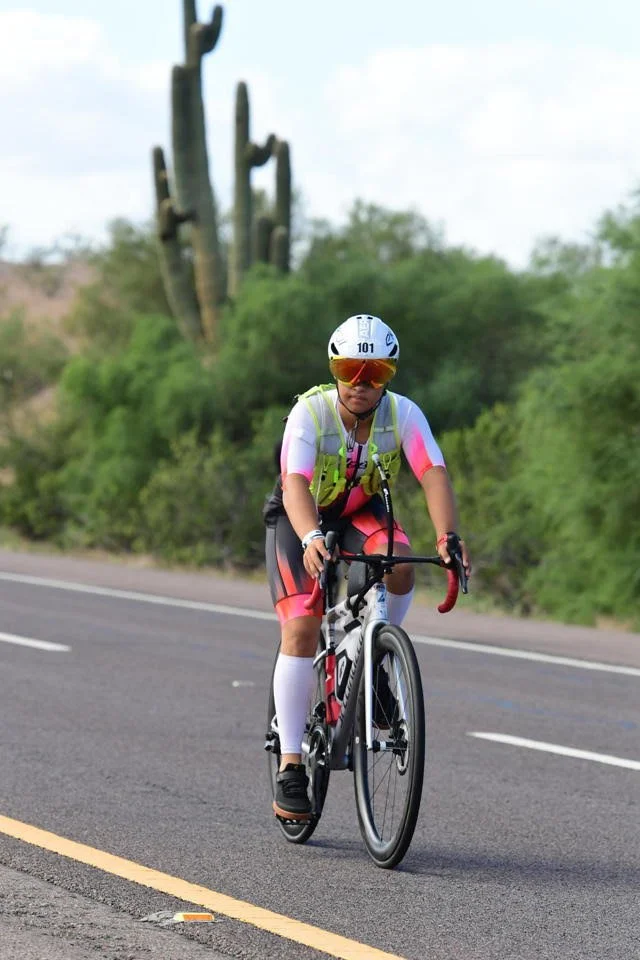
IRONMAN Arizona
Said “Yes”
Race leadership at IRONMAN Arizona evaluated Robert not as a diagnosis, but as an athlete.
They looked at:
His training volume
His discipline
His race history
His demonstrated independence
His safety protocols
His readiness
And they made the call:
“He can do this. Let him race.”
They became the lid‑lifters — the ones who removed the artificial ceiling others tried to place on him.
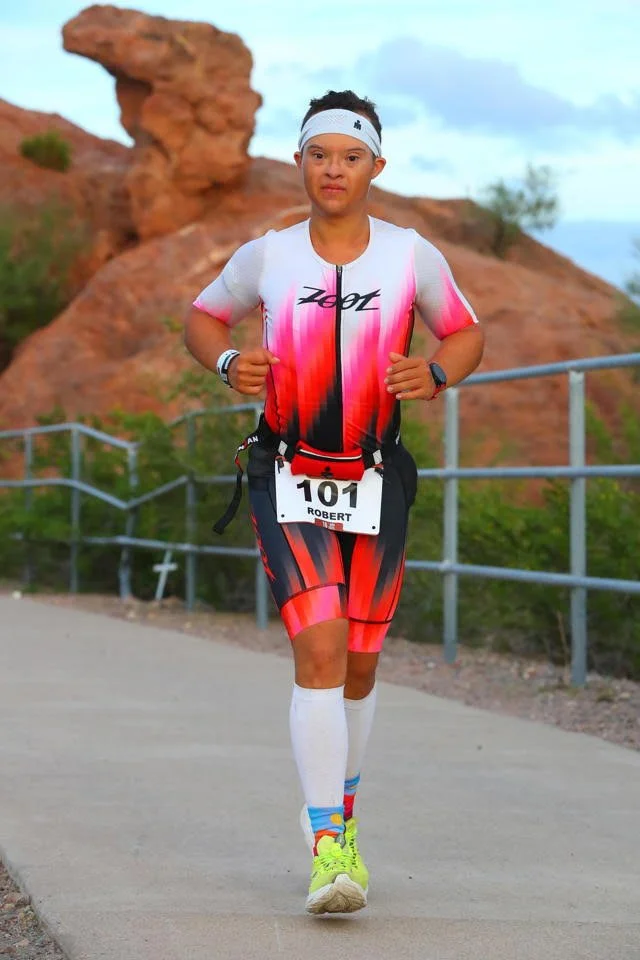
Everyone Told Him to Stay Tethered
— Except the Ones Who Mattered
The Down Syndrome Community Told Him “No”
Before Arizona, Robert heard the same message repeatedly:
“You must stay tethered.”
“You can’t race independently.”
“Down syndrome athletes aren’t allowed to do that.”
“It’s too dangerous.”
“It’s not possible.”
These weren’t critics. These were leaders, organizations, and gatekeepers within the Down syndrome community — people who believed they were protecting him.
But protection became limitation. Limitation became dogma. Dogma became a ceiling.
Robert broke it.
Why Robert’s Achievement
Matters
He Redefined What
“Down Syndrome Ironman” Means
Before Robert Norris, the prevailing belief was that athletes with Down syndrome could participate in long‑course triathlon only through tethers, guides, or forced assistance. That belief wasn’t malicious — it was inherited, unchallenged, and treated as a fixed rule.
Robert’s finish at IRONMAN Arizona erased that rule.
He completed 140.6 miles independently. No guide. No tether. No exceptions.
His performance forces a new understanding: capability must be measured by the athlete, not the diagnosis.
He Proved Ability
Is Not Determined
by Assumption
Robert’s race wasn’t symbolic. It wasn’t ceremonial. It wasn’t a “special category” finish.
It was earned through:
disciplined training
demonstrated independence
long‑course experience
the same standards every athlete faces
His finish exposes the flaw in the old assumption: that Down syndrome automatically limits endurance capacity. Robert showed that independence is possible, safety is achievable, and performance is built — not granted.
He Set a New Standard
for Inclusion
in Endurance Sport
IRONMAN Arizona’s leadership made a pivotal choice: They evaluated Robert as an athlete, not as a diagnosis.
They didn’t lower the bar. They didn’t create a separate lane. They didn’t force him into a guided model.
They assessed his readiness, his training, his safety protocols, and his proven independence — and they lifted the lid others tried to place on him.
Their decision reframed what inclusion actually looks like:
Not restriction disguised as protection, but opportunity grounded in capability.